Kingdom of Europe
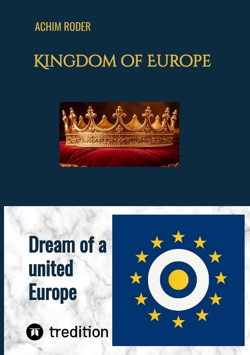
Kingdom of Europe – A Story of Hope, Responsibility and the Venture of Democracy is a utopian political novel that outlines a peaceful and realistic vision for Europe’s future. Rather than indulging in dystopian narratives or scenarios of decline, the work develops a positive yet consciously non-naïve perspective. It asks what might happen if Europe were to refound itself not out of fear of the world, but out of responsibility for it.
At the heart of the narrative lies the political process of transforming today’s European Union into a genuine European federal state:
the “Kingdom of Europe”. Yet, contrary to what the title may suggest, this is not a restoration of monarchy in the traditional sense, but a political metaphor. Monarchy here is symbolic — it stands for measure, dignity, historical awareness and the power to connect in an age of increasing complexity.
The book opens with a moment of upheaval: a secret meeting in Rome at which leading European heads of state and government — among them Markus Söder (Germany), Emmanuel Macron (France) and Keir Starmer (United Kingdom) — recognise the signs of the times. In a world of multiple crises — climate change, social fragmentation, technological transformation and geopolitical tension — they articulate the desire not merely to administer Europe, but to rethink it.
From this impulse emerges a constitutional convention, whose opening session in Oslo is portrayed as a democratic founding moment. Representatives from politics, academia, civil society, youth and culture come together. Working publicly and in dialogue with Europe’s citizens, they draft a new constitution — the “Carta Europa”. The focus is not on technocratic design, but on fundamental questions: What holds Europe together? What must such a state guarantee? What can it do better than the former EU?
The fundamental rights of the new state encompass not only classical liberties and social protections, but also modern guarantees such as digital self-determination, climate justice, cultural diversity, participation beyond electoral rights and protection against algorithmic manipulation. The institutions are conceived as transparent, federal and participatory. A parliamentary democracy takes shape, complemented by direct civic participation, an independent Ethics Council and a symbolic Crown Council, chaired by Charles III as the first constitutional monarch.
The path to the new order does not unfold through a dramatic rupture, but through political processes, debates and compromises. The Kingdom of Europe emerges not through revolution, but through evolutionary transformation. The old EU is left behind peacefully — with clear communication, mutual respect and a commitment to preserving neighbourly relations and cooperation.
The book recounts this process in 53 chapters. With each chapter, the horizon expands: from the debates on fundamental rights in Oslo, to the introduction of the common currency “Euro-E”, the establishment of a European federal police force, the development of new education and healthcare structures, and the accession of further states such as Denmark, Iceland, Italy, Greece, Portugal and Cyprus. Culturally and geopolitically, a new frame of reference also emerges: Europe develops a space programme, its own satellite system, establishes a digital public-interest internet and founds a transnational university.
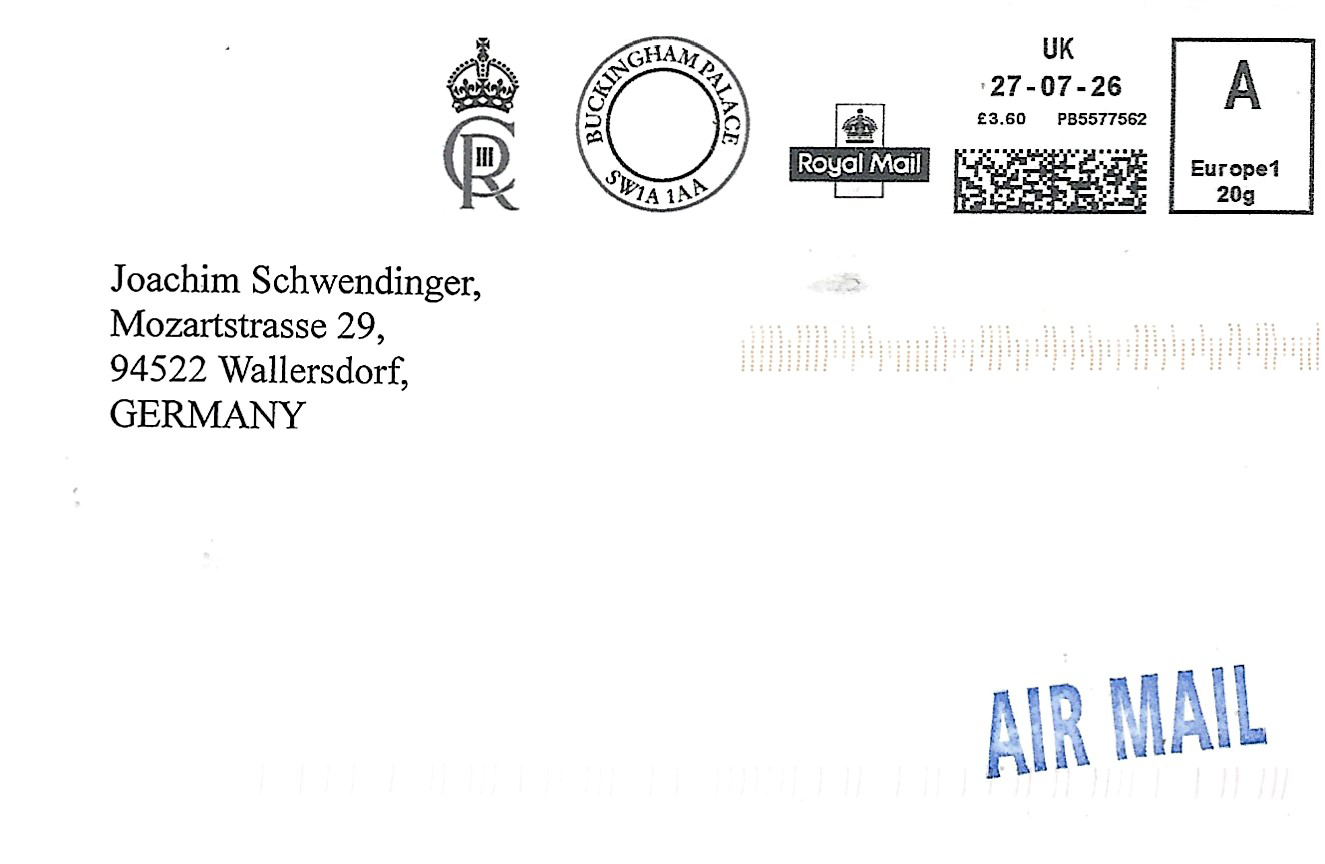
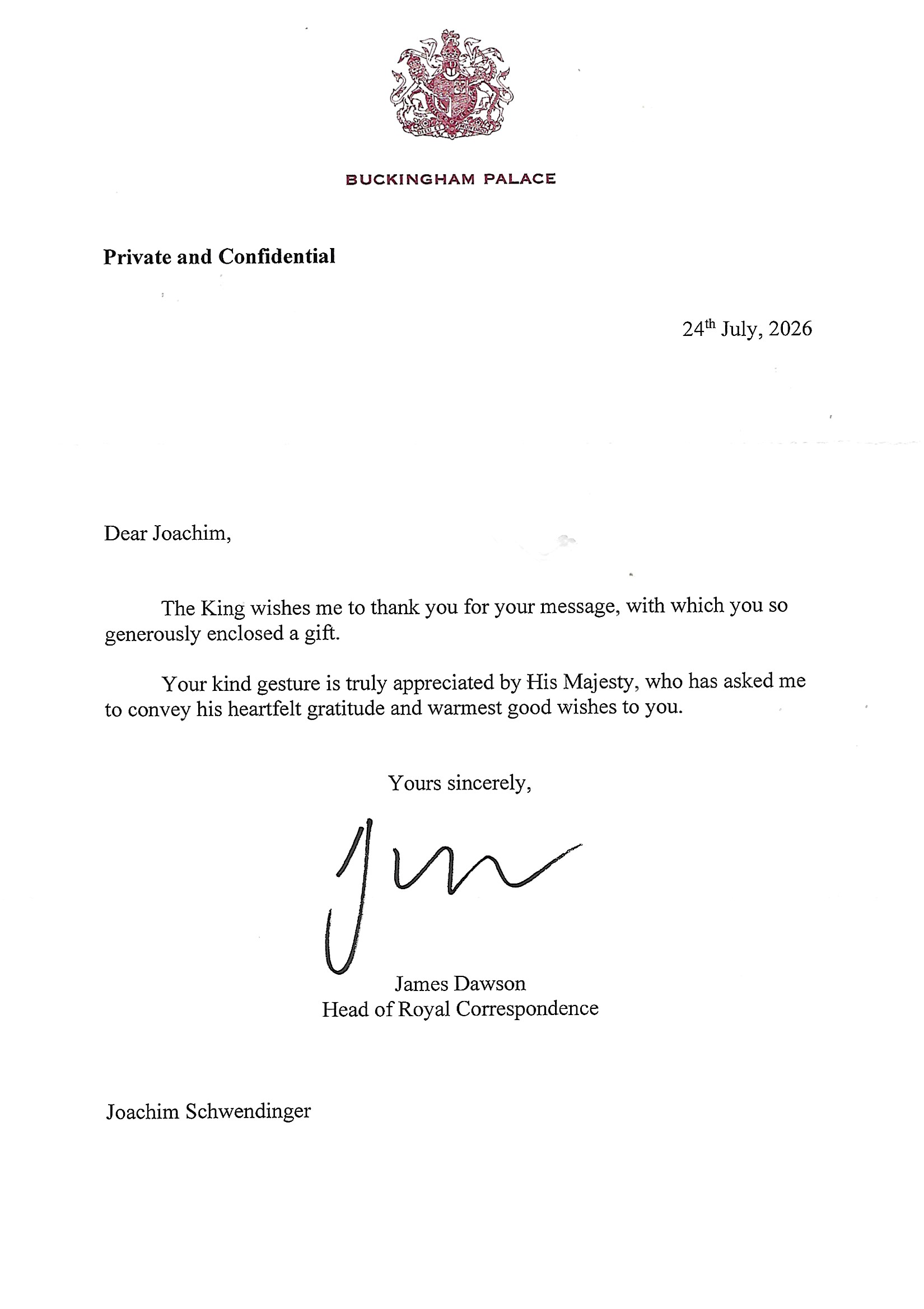
Antwort aus dem britischen Königshaus